MobiGa relies on Kebony wood
Kebony wood has become increasingly important in architecture and urban planning in recent years. We explain why we at MobiGa work with Kebony, why the wood is a good choice for cities and municipalities, and how it helps to beautify our urban spaces in the long term and make them climate-adapted and sustainable.
What is Kebony wood?
Kebony is a high-quality, modified wood that is treated using an environmentally friendly process to increase the durability and resistance of softwood. This patented, two-stage process not only improves the physical properties of the wood, but also ensures that it has a long service life and requires little maintenance. Kebony is used nationwide for urban projects. Beach paths on Usedom, park benches in Münster, and playgrounds in Munich have already been built with Kebony.
Benefits of Kebony wood for cities and municipalities:
Sustainability: Kebony wood comes from FSC-certified, sustainably managed forests, making it an environmentally friendly alternative to conventional building materials. It is a good material for cities and municipalities that want to reduce their ecological footprint.
Durability and low maintenance: Unlike conventional wood, Kebony is resistant to weathering, fungal growth, and insect infestation. This means that MobiGa models made with Kebony require less maintenance and save money in the long term.
Aesthetics and patina development: Unlike other types of wood, where weathering is considered a disadvantage, the patina of Kebony is an intentional, attractive feature. No oiling or similar treatment is required after installation.
Climate adaptation: The light patina of the wood barely warms up in strong sunlight, so that even on hot days, the benches have a pleasant surface temperature.


Thanks to their durability and low maintenance requirements, MobiGa systems with Kebony offer a cost-effective and resource-saving solution that remains attractive in the long term.
It is an example of how modern materials can help make our cities and communities more beautiful, sustainable, and livable.
Why do we use Kebony wood at MobiGa?
Since we collect rainwater via the seating surfaces, the water dripping from the wooden slats must not be contaminated by oils or traditional wood preservatives. This would affect the health of the plants and could also damage the irrigation system. With Kebony wood, this is avoided thanks to its special impregnation. The particularly high natural durability of the wood is a particularly positive factor. If, for example, slats need to be replaced due to vandalism, we can reuse them for other projects. We even want to use the sawing residues for substrate production in the future, in order to move closer to our vision of waste-free, resource-saving, cycle-oriented, and CO2-positive production.
Incidentally, should Kebony wood reach the end of its service life, it is not subject to the European Pesticides Regulation (76/769/EEC). This means that it can be disposed of in the same way as any other untreated wood.
Where and how do we use Kebony wood at MobiGa?
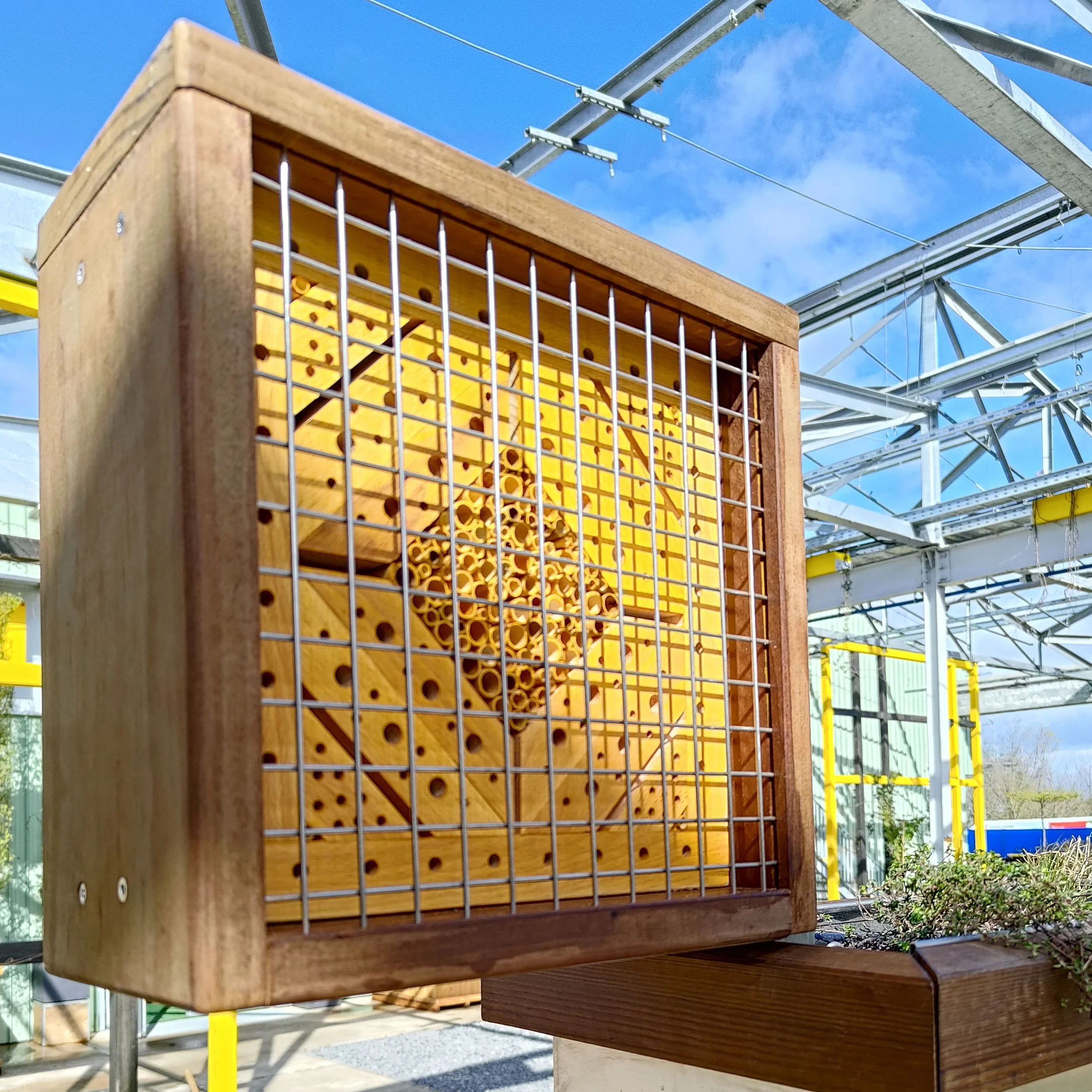
For the benches, side panels, and decorative moldings, we use Kebony Character Rhomus moldings with cross-sectional dimensions of 29x59 mm as standard. These are made from Scots pine (Pinus Sylvestris) and contain knots and untreated heartwood. The proportion of heartwood may vary. We do not carry out any additional planing or sanding. This is because, especially in combination with the MobiGa systems, the special structure of Kebony wood is ideal for outdoor use. However, we use Kebony Clear to protect the wild bee nesting aids from the weather. This wood is virtually knot-free and has a natural and refined appearance. On customer request, we can also equip the benches and panels with Kebony Clear.
Further information on the manufacturing process and the properties of Kebony wood can be found on the Kebony website.
By the way, have you heard of Kebony's podcast "Zukunft Holz" (The Future of Wood)? This freely available audio magazine discusses practical aspects of design and construction, while also looking ahead to the future of wood design. In the episode"Mobile Gardens for the City of the Future," our co-founder Dr. Markus Dotterweich shares first-hand how the idea for mobile vertical gardens came about and what makes them so unique. The podcast is available on Spotify and many other podcast players. Have a listen!